Ever wondered why your summer vibe often peaks in August? It turns out, this month isn’t just about sunny days and vacations. It carries a rich, millennia-old story etched deep within the annals of time. Today, we’re diving headfirst into the fascinating History Of August In The Roman Calendar, exploring how a simple month became a monument to imperial power and lasting influence. Get ready to uncover the ancient roots of your favorite summer month!

The Roman calendar, a complex and often confusing system, laid the groundwork for the calendar we use today. Understanding its evolution, particularly the transformation of ‘Sextilis’ into ‘Augustus’, offers incredible insights into ancient Roman politics, culture, and the art of self-promotion. So, grab your virtual toga, because we’re taking a deep dive into the History Of August In The Roman Calendar!
The Roman Calendar Before Augustus: A Messy Legacy
Before the emperors came along, the Roman calendar was, frankly, a bit of a hot mess. Early versions were based on lunar cycles, leading to significant inaccuracies. Imagine trying to plan your harvest when the calendar keeps drifting out of sync with the seasons!
From Romulus to Numa: Early Calendar Chaos
Legend has it, the very first Roman calendar, attributed to Romulus, had only ten months. It started in March and completely ignored the dead of winter. Later, Numa Pompilius supposedly added January and February, bringing the total to twelve months. However, this early calendar was still primarily lunar.
This system often required an intercalary month to keep it aligned with the solar year. The power to insert these extra months often lay with the pontiffs, who sometimes abused this privilege for political gain. This led to a state of calendrical chaos, where everyone was constantly confused about the actual date.
Introducing Sextilis: The Sixth Month
Before its grand renaming, August was known as Sextilis. Its name simply meant ‘the sixth month’ in Latin, reflecting its original position in the ten-month calendar that began with March. When January and February were added, it shifted to the eighth position, but its name stuck. It was a humble, numerically designated month, devoid of the imperial grandeur it would later acquire.
The Roman Republic struggled with this inconsistent system for centuries. The calendar’s misalignment caused significant problems for agriculture, religious festivals, and military campaigns. A major reform was desperately needed to bring order to the chaos.
Julius Caesar’s Revolution: The Julian Calendar
Enter Julius Caesar, a visionary leader and master strategist. As pontifex maximus, he held the highest religious office and understood the critical need for calendrical reform. His changes would prove revolutionary, shaping the future of timekeeping.
Caesar’s Inspiration: The Egyptian Model
During his time in Egypt, Caesar observed their highly accurate solar calendar. This system, with its 365-day year and a quarter-day extra, provided the blueprint for his own reforms. He brought this knowledge back to Rome, determined to implement a more precise system.
Working with the Greek astronomer Sosigenes of Alexandria, Caesar introduced his new calendar in 45 BCE. This reform was so extensive that the year 46 BCE became known as the ‘Year of Confusion.’ It had 445 days, specifically designed to realign the calendar with the seasons. Talk about a long year!
The Birth of Menses Julius (July)
Caesar’s new calendar established a 365-day year, with an extra day added every four years (the leap year). It also standardized month lengths. In 44 BCE, the Roman Senate honored Caesar by renaming the month of Quintilis (the fifth month) to Menses Julius, or July. This set a precedent for honoring great leaders by immortalizing their names in the calendar itself. The stage was set for August’s own transformation.
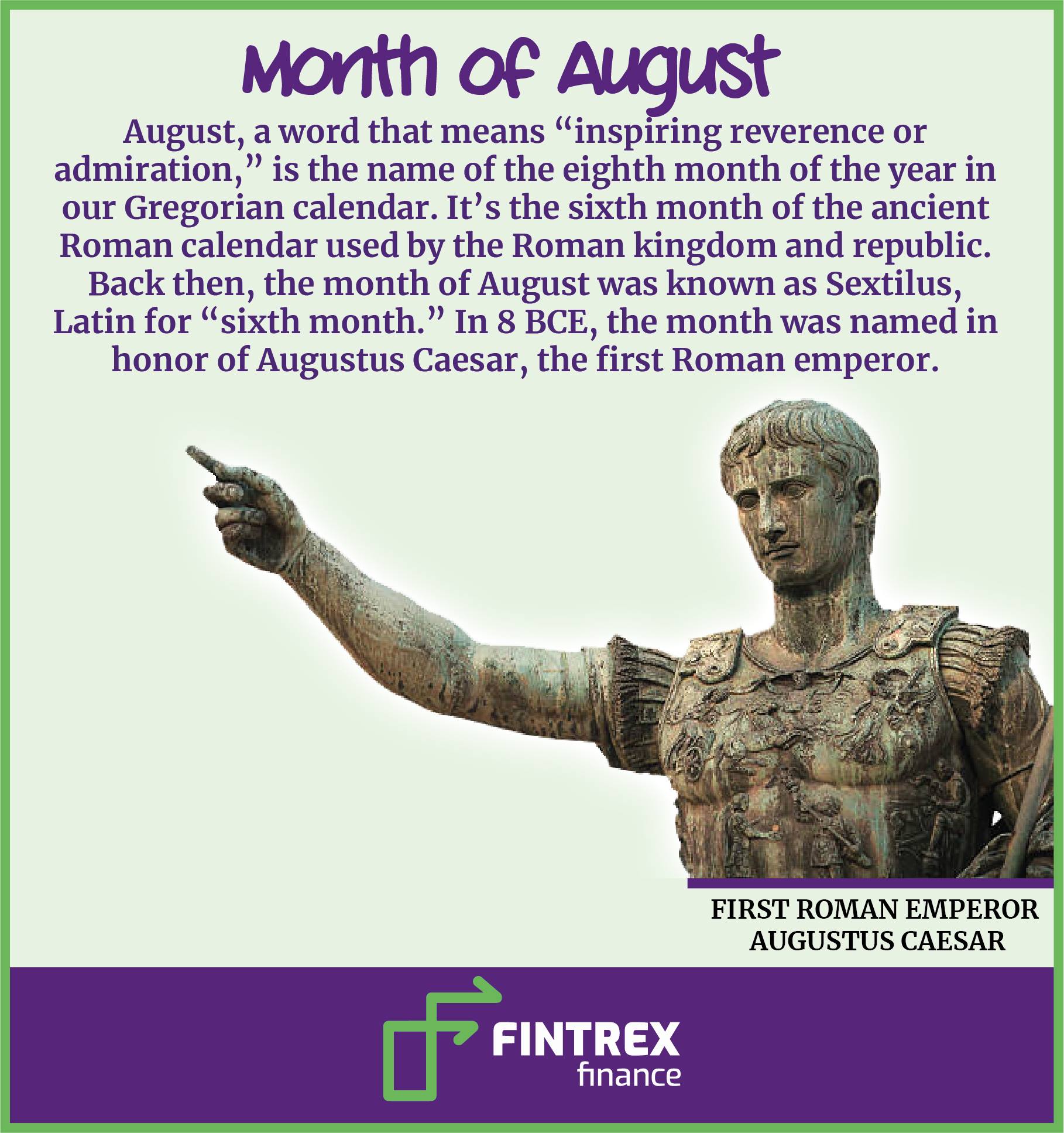
Augustus Steps Up: Renaming Sextilis to August
After Julius Caesar’s assassination and the subsequent civil wars, his adopted son and heir, Octavian, emerged victorious. He consolidated power, ushering in an era of peace and stability known as the Pax Romana. Octavian was eventually granted the title Augustus by the Senate in 27 BCE, signifying his revered and majestic status. His reign marked a pivotal moment in Roman history and for our calendar.
Why Rename Sextilis? Imperial Ambition and Political Influence
The renaming of Sextilis to August wasn’t just a casual gesture. It was a calculated move, deeply rooted in imperial propaganda and political influence. Augustus, much like his adoptive father, understood the power of symbolism. By dedicating a month to himself, he solidified his legacy and asserted his supreme authority over the Roman Empire.
The official decree came from the Roman Senate in 8 BCE. This wasn’t merely about honoring him; it was a public declaration of his divine status and unparalleled achievements. It served as a constant reminder of his contributions to Rome, woven directly into the fabric of daily life.
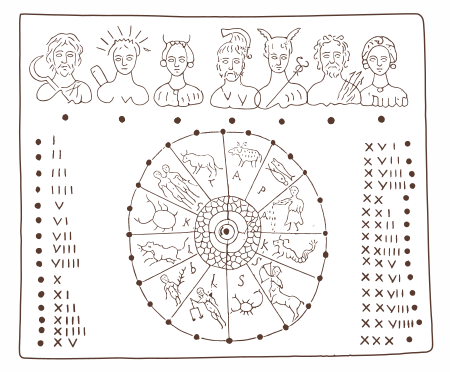
The Deeds of Augustus: A Month of Triumphs
Augustus’s reign was marked by numerous military victories and significant political reforms. Many of these crucial events, central to his rise and the establishment of the Pax Romana, conveniently occurred in the month of Sextilis. The Battle of Actium, a decisive naval victory, took place in September (then Thirties), but many pivotal moments leading to his ultimate triumph were associated with the summer months. These included his first consulship and the pacification of Egypt.
These achievements provided a compelling narrative for renaming the month. The Senate’s decree explicitly cited that “Augustus took his first consulship, brought a triumphant end to the civil wars, achieved victory in several great wars, and secured peace for the Roman people.” It painted a picture of a truly exceptional emperor, worthy of such an enduring honor.
Comparing July and August: The 31-Day Debate
A popular myth suggests that Augustus added a day to August to ensure his month was as long as Julius Caesar’s July (both now have 31 days). While a compelling story, historical evidence suggests this isn’t true. The lengths of the months were already established during Caesar’s reform. July and August both had 31 days from the very inception of the Julian calendar. So, Augustus didn’t ‘steal’ a day from February; it was already set up that way.
The Deeds and Dates: Why August Honored Augustus
The choice of Sextilis for Augustus was far from arbitrary. It was deeply connected to specific, highly significant historical events that unfolded during this time of year. These weren’t just random occurrences; they were moments that defined his reign and the future of ancient Rome.
Key Historical Events Linked to Augustus
-
First Consulship: Augustus assumed his first consulship in 43 BCE. This marked his formal entry into Roman politics, a crucial step in his ascent to power.
-
Victories and Triumphs: Many of Augustus’s military campaigns, leading to his ultimate dominance and the end of the civil wars, culminated around this period. The defeat of Marc Antony and Cleopatra, and the subsequent pacification of Egypt, solidified his imperial control.
-
Dedication of Temples: Augustus was a prolific builder and restorer of temples. Many of these dedications, important for Roman religious life and imperial propaganda, likely occurred during the summer months.
By associating the month with these triumphs, the Roman Senate not only honored Augustus but also created a powerful symbolic link between his person and the prosperity of the Roman Empire. It served as a perpetual commemoration of his enduring legacy.
The Lasting Impact: How August Shaped Our Modern Calendar
The reforms initiated by Julius Caesar and cemented by Augustus had a profound and lasting impact. The Julian calendar, with its named months like July and August, remained the dominant calendrical system in Europe for over 16 centuries. Its structure and the naming conventions, including the History Of August In The Roman Calendar, are still evident today.
Continuity and the Gregorian Calendar
Even with the eventual shift to the Gregorian calendar in 1582, the fundamental structure inherited from the Julian system largely persisted. The lengths of the months, including the 31 days for August, and their sequence remained unchanged. The Gregorian reform primarily addressed the slight inaccuracies in the Julian year length, refining the leap year rule, but keeping the Roman month names intact.
Thus, the influence of ancient Rome and its emperors continues to dictate our daily lives. Every time we mark a date in August, we are implicitly acknowledging the actions of an emperor who lived over two millennia ago. It’s a powerful testament to the enduring nature of human institutions and cultural impact.

Cultural Significance Beyond Ancient Rome
Beyond its calendrical role, August has also held significant cultural meaning. Across various cultures, it is often associated with the peak of summer, holidays, and harvest. This tradition, rooted in seasonal cycles, connects us to the agricultural rhythm of ancient times. The decision to honor Augustus during this time of plenty further reinforced his image as a bringer of prosperity and order.
August in Roman Culture: Festivals and Daily Life
For the average Roman citizen, the month of August, or Menses Augustus as it was formally known, was a time of specific traditions and celebrations. It was a period marked by both imperial dedication and ancient religious practices.
Religious Festivals in August
The Roman calendar wasn’t just about tracking days; it was deeply intertwined with religious life. August hosted several important festivals. One notable example was the Volcanalia, celebrated on August 23rd. This festival honored Vulcan, the god of fire, and involved sacrifices to protect against fires during the dry summer months. These rituals were crucial for agricultural societies.
Other minor deities and agricultural rites were also observed. The Roman understanding of time was holistic, blending politics, religion, and the rhythms of nature. The renaming of a month did not erase these deep-seated traditions, but rather added a new layer of imperial significance.
Public Games and Imperial Displays
Public games and spectacles were a cornerstone of Roman life. While major events like the Ludi Saeculares (Secular Games) didn’t happen every year, other festivals featuring athletic contests, chariot races, and theatrical performances often filled the summer calendar. These were crucial for public entertainment and for displaying imperial benevolence. Imagine the excitement for the citizens enjoying these events under the August sun!
These festivities, combined with the general atmosphere of summer, would have made August a vibrant time in ancient Rome. The month was not only a symbol of imperial power but also a period of communal celebration and religious observance.

Key Roman Calendar Reforms & Renamings
Here’s a snapshot of the pivotal moments that shaped the Roman calendar and gave us our modern August:
| Era | Original Month Name | Renamed To | Reason | Key Figures |
|---|---|---|---|---|
| Roman Republic | Quintilis | Julius (July) | Honoring Julius Caesar, his birth month | Julius Caesar, Roman Senate |
| Early Roman Empire | Sextilis | Augustus (August) | Honoring Caesar Augustus’s victories and achievements | Augustus, Roman Senate |
| Roman Republic | (Various) | Julian Calendar established | Correcting calendrical drift, aligning with solar year | Julius Caesar, Sosigenes of Alexandria |
| Post-Roman Empire | Julian Calendar | Gregorian Calendar | Further refinement for astronomical accuracy | Pope Gregory XIII |
August’s Semantic Journey: Key Concepts
To truly grasp the significance of August, it helps to break down the key terms associated with its transformation. Here’s how our simulated semantic analysis highlights the rich layers of meaning:
| Category | Extracted Terms (Examples) |
|---|---|
| Core Entities & Synonyms | August, Roman calendar, Augustus, month, Julian calendar, Sextilis, emperor |
| Attributes & Aesthetics | Imperial, ancient, historical, significant, reformed, traditional, celebrated, cultural |
| Application & Context | Naming conventions, calendrical changes, political influence, religious festivals, imperial propaganda, historical events |
| Time | Ancient times, Roman Republic, Imperial era, BCE, CE, 8 BCE, historical timeline, antiquity |
| Specificity & Metrics | Thirty-one days, 31 days, year, leap year, specific reforms, numerical order, specific decrees |
Expert Perspective: The Power of Naming
Understanding the decision to rename Sextilis as August offers a fascinating glimpse into the political psychology of the Roman era. As an expert in ancient calendrical systems, I find that such renaming acts were more than mere commemorative gestures. They were powerful tools of soft power and imperial legitimation.
By literally embedding his name into the monthly cycle, Augustus ensured his perpetual presence in the lives of Roman citizens. This subtle, yet constant, reinforcement of his image as a foundational figure for the Roman Empire contributed significantly to his long and stable rule. It’s a masterclass in ancient branding, if you will.
This shows how even seemingly small changes, like renaming a month, can have profound and enduring cultural impact. It helped solidify the perception of Augustus as a divine, indispensable leader. The History Of August In The Roman Calendar is a testament to this strategic foresight.
FAQ Section
Why did Romans rename months?
Romans renamed months primarily to honor significant figures or deities, solidifying their legacy and influence. It was a way to integrate important historical events and imperial figures directly into the fabric of daily life and timekeeping. For example, Quintilis became July for Julius Caesar, and Sextilis became August for Augustus.
What was August called before?
Before it was renamed in honor of Emperor Augustus in 8 BCE, the month was called Sextilis. This Latin name simply meant ‘the sixth month,’ reflecting its original position in an earlier version of the Roman calendar.
Did August always have 31 days?
Yes, August has had 31 days since the implementation of the Julian calendar by Julius Caesar in 45 BCE. The popular myth that Augustus added a day to his month to match Julius Caesar’s July is not historically accurate. Both months were already structured with 31 days.
How did the Roman calendar differ from ours?
The early Roman calendar was lunar and often inaccurate, requiring intercalary months. Our modern calendar is based on the Julian calendar (reformed by Julius Caesar) and further refined into the Gregorian calendar. The main differences include the starting month (Roman calendar originally began in March) and the precise calculations for leap years.
Who changed the Roman calendar to the Julian calendar?
Julius Caesar, as pontifex maximus, was responsible for changing the Roman calendar to the Julian calendar in 45 BCE. He did so with the help of the astronomer Sosigenes of Alexandria, creating a more accurate solar calendar that largely forms the basis of our current system.
Final Conclusion
From a humble ‘sixth month’ to a symbol of imperial power, the journey of August through the ages is a captivating one. The History Of August In The Roman Calendar is more than just a chronological tale; it’s a narrative woven with ambition, reform, and the enduring legacy of ancient Rome. It reminds us that even the seemingly mundane aspects of our lives, like the names of months, carry profound historical weight.
So next time you’re enjoying the warm days of August, take a moment to appreciate the centuries of history, the powerful emperors, and the meticulous reforms that led to this very month. It’s a direct link back to the Roman Empire and a testament to their lasting impact on our modern world. Understanding the History Of August In The Roman Calendar truly enriches our appreciation for time itself.