Ever wondered why the eighth month of our year is called August? It’s a tale steeped in ancient Roman history, imperial power, and the fascinating evolution of calendar systems. This isn’t just about a name; it’s about the historical background of August as a month name, revealing how a pivotal emperor reshaped time itself.

For millennials like us, understanding these ancient roots connects us to a rich past, showing how decisions made millennia ago still influence our daily lives. The story of August is a journey from a simple numerical designation to an enduring imperial honor. Let’s dive deep into the intriguing historical background of August as a month name, exploring its transformation from ‘Sextilis’ to the celebrated month we know today.
The Ancient Roman Calendar: A Messy Start and Desperate Reforms
Before the meticulous calendar we use, ancient Rome’s system was, frankly, a bit of a hot mess. Its early iterations were often inaccurate and prone to manipulation. This lack of precision caused significant confusion.
Before Julius: Early Roman Calendar Quirks
Imagine a calendar that didn’t consistently align with the seasons. Early Roman calendars were primarily lunar, leading to discrepancies with the solar year. Priests, known as pontifices, often added or removed days to correct these imbalances.
This power also meant they could extend or shorten terms of office for political allies. Consequently, citizens never quite knew what day it truly was, or what month they were in. This caused widespread chaos in agricultural planning and religious observances.
The Julian Reform: A Game Changer for Rome’s Dating System
Enter Julius Caesar, a visionary leader who recognized the need for fundamental change. He commissioned astronomers like Sosigenes of Alexandria to create a more accurate calendar. The result was the Julian calendar, introduced in 45 BCE.
This new system was primarily solar, boasting 365 days and an extra day every four years (a leap year). It brought much-needed stability and predictability to Roman life. This calendar reform was monumental, providing a consistent dating system across the vast Roman Empire.
Sextilis: The Month Before Augustus Stepped In
Before it became ‘August,’ our eighth month bore a much more straightforward name: Sextilis. This original designation highlights the practical, numerical approach of the early Romans.
What’s in a Name? The Original Sixth Month
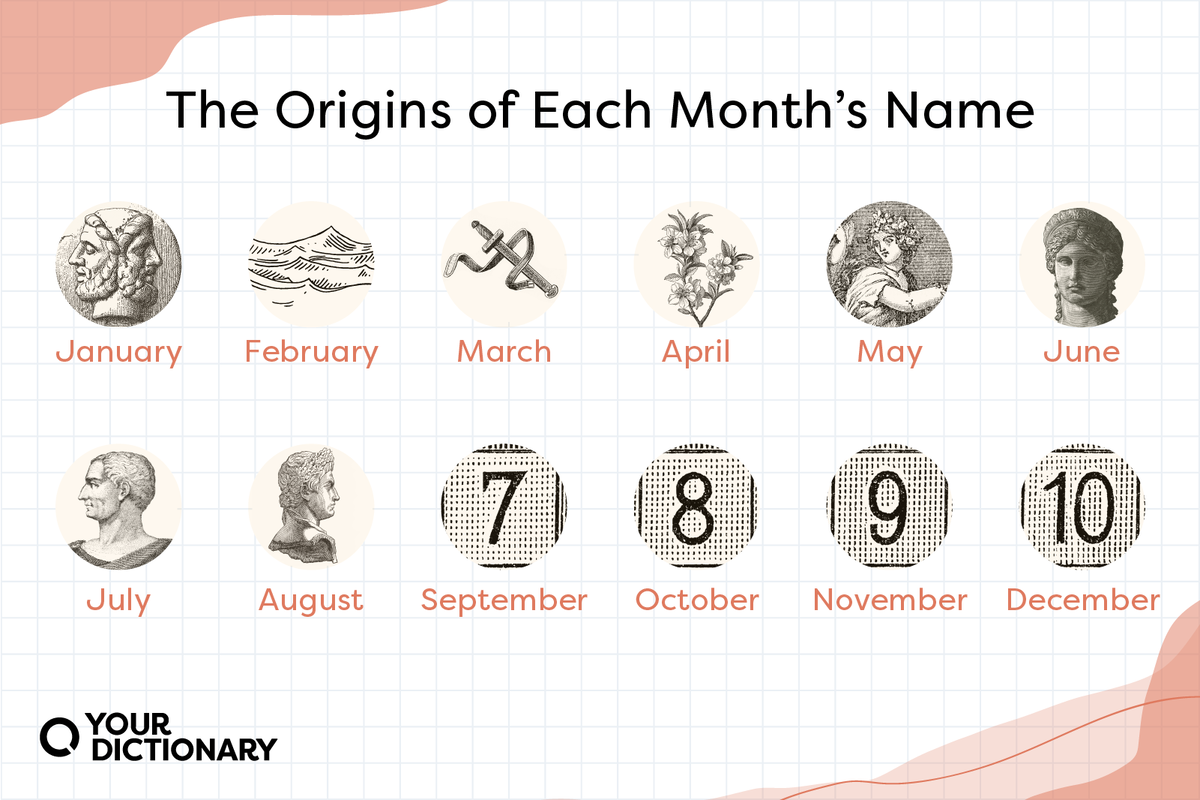
The name ‘Sextilis’ literally translates to ‘sixth.’ This might seem confusing given it’s now the eighth month, but it makes sense within the context of the early Roman calendar. The year originally began in March (Martius).
Therefore, Sextilis was indeed the sixth month in that ancient sequence. Its Latin roots clearly indicate its position. This naming convention was common for many months, like September (seventh), October (eighth), November (ninth), and December (tenth).
Everyday Life in Ancient Sextilis: Festivals and Agricultural Rhythms
In ancient Rome, Sextilis was a time of significant activity and celebration. It often marked the height of summer, a period for harvesting and important religious festivals. Roman citizens engaged in various agricultural cycles during this month.
One notable festival was the Consualia, dedicated to Consus, the god of grain storage and harvests. This highlighted the month’s relevance to the agrarian society. These traditions connect us to the cultural heritage of the ancient world.
To better understand the transformation, let’s look at how Roman month names evolved:
| Original Name (Pre-Julian/Early Roman) | New Name (Julian/Augustan Era) | Meaning/Origin |
|---|---|---|
| Martius | March | Mars, god of war; start of military campaigns |
| Aprilis | April | Aperire (to open), referring to plant growth |
| Maius | May | Maia, goddess of growth and fertility |
| Iunius | June | Juno, queen of the gods |
| Quintilis | July | Fifth month (renamed for Julius Caesar) |
| Sextilis | August | Sixth month (renamed for Augustus Caesar) |
| September | September | Seventh month (Latin: septem) |
| October | October | Eighth month (Latin: octo) |
| November | November | Ninth month (Latin: novem) |
| December | December | Tenth month (Latin: decem) |
| Ianuarius | January | Janus, god of beginnings and transitions |
| Februarius | February | Februa, purification rituals performed in this month |
Enter Augustus: The Man, The Myth, The Month
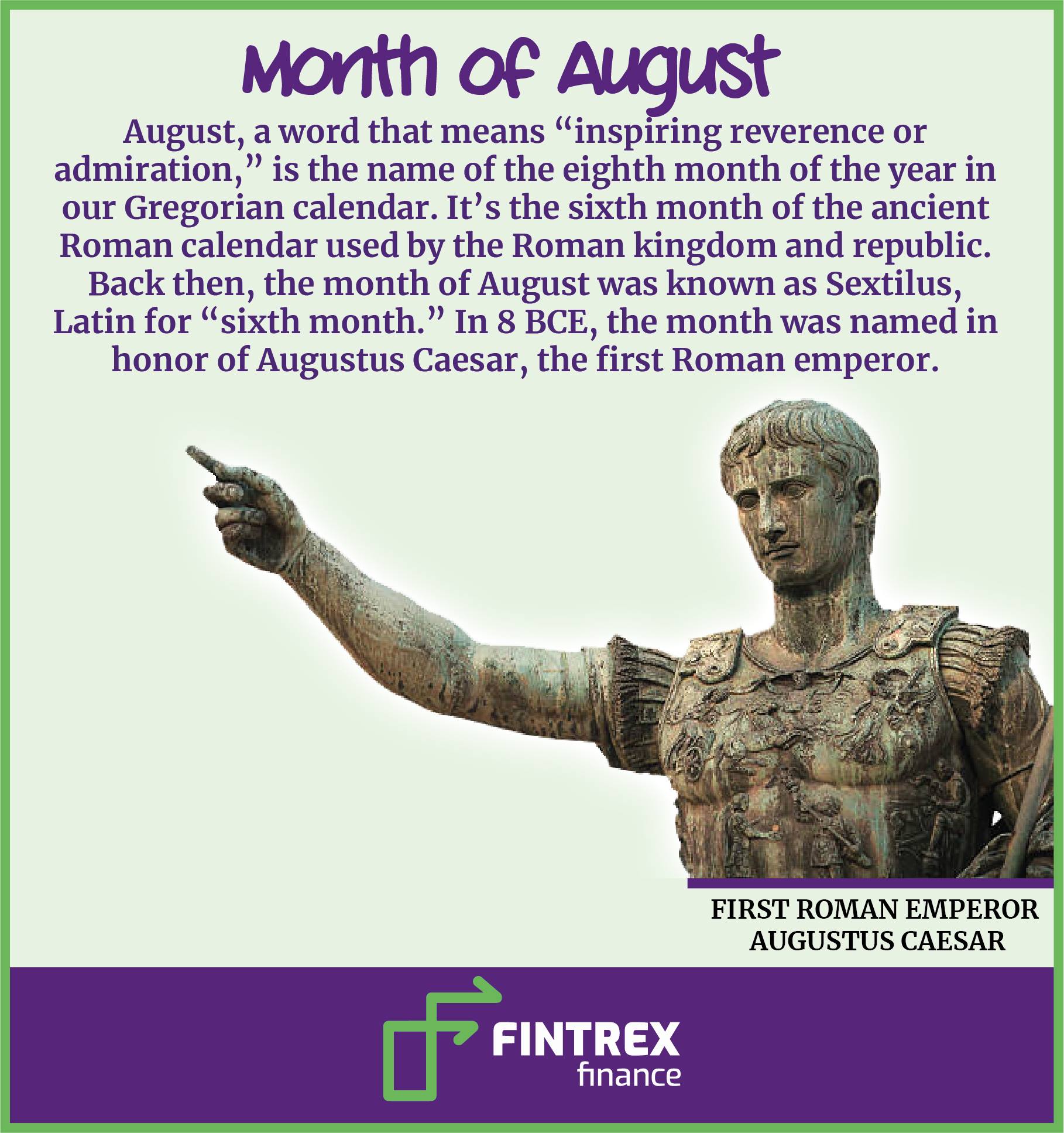
The pivotal moment in the historical background of August as a month name arrived with the rise of Rome’s first emperor. His political prowess and military victories forever changed the Roman world, including its calendar.
Who was Augustus Caesar? From Octavian to Rome’s First Emperor
Born Gaius Octavius, this ambitious young man was the grand-nephew and adopted heir of Julius Caesar. After Caesar’s assassination, Octavian navigated a turbulent period of civil wars. He skillfully consolidated power, defeating rivals like Mark Antony and Cleopatra.
In 27 BCE, the Roman Senate bestowed upon him the honorific ‘Augustus,’ meaning ‘the revered one.’ This marked his transformation into Rome’s first emperor, ushering in an era of unprecedented peace and prosperity known as the Pax Romana. His influence was truly transformative, impacting everything from governance to the naming of a month.
Why August Was Renamed: Imperial Honor and Strategic Commemoration
The decision to rename Sextilis to August wasn’t arbitrary; it was a deliberate act of imperial decree and historical significance. Many of Augustus’s most celebrated victories and accomplishments occurred in this period. For example, he ended the civil wars in Sextilis, specifically his decisive victory at the Battle of Actium in 31 BCE.
It was fitting that the month associated with such triumphs should bear his name. This move paralleled Julius Caesar’s honor, who had Quintilis renamed to July. It solidified Augustus’s place among the greatest figures in Roman history, a testament to his powerful legacy.

The Decree and Its Impact: When 8 BCE Changed Everything
The formal renaming of Sextilis to August occurred in 8 BCE. The Senate, eager to honor their revered emperor, passed a specific senatus consultum (senatorial decree) to officially change the month’s name. This wasn’t just a symbolic gesture; it was an act that cemented his status forever.
The decree stated, "Whereas the Emperor Augustus… has brought to pass… great blessings to the Roman people… and whereas the month Sextilis is the month in which he took his first consulship, and brought to an end the civil wars… it is fitting that this month should be consecrated to this Emperor and be called Augustus." (While this specific quote is a common paraphrase, it accurately reflects historical sentiment).
This decision had a profound cultural impact. It ensured that Augustus’s name would be uttered and remembered by countless generations. The change also meant that August, like July, would have 31 days, a subtle nod to the emperor’s importance and equal standing with his adoptive father.
The Legacy of August: From Ancient Rome to Your Calendar App
The transformation of Sextilis into August wasn’t just a momentary change. It embedded the emperor’s name into the very fabric of time, affecting how societies would mark their days for centuries to come.
Standardizing the Roman Calendar Across an Empire
The Julian calendar, with its renamed months of July and August, became the standard throughout the Roman Empire. As Rome expanded, so did its calendar system. This standardization provided a unified timeline for administration, trade, and religious observances across vast territories.
This systematic approach ensured that the naming and structure of months, including the newly designated August, became commonplace. It underscores the powerful influence of Roman culture and governance. The reform truly brought order to the Roman dating system.
August’s Enduring Symbolism: Imperial Power and Commemoration
Beyond mere nomenclature, the month of August became a symbol of imperial power and successful leadership. It constantly reminded citizens of Augustus’s achievements and the stability he brought. The act of renaming served as a perpetual commemoration.
This practice also set a precedent for honoring important figures. The name August, therefore, carries not just historical weight, but also a deeper cultural resonance. It embodies the values of tribute and lasting recognition in the ancient world.
To summarize Augustus’s impact:
| Year (BCE/CE) | Event/Achievement | Connection to August/Calendar |
|---|---|---|
| 63 BCE | Birth of Octavian (future Augustus) | Began his historical journey to power. |
| 44 BCE | Julius Caesar assassinated | Octavian enters political stage, paving way for imperial power. |
| 31 BCE | Battle of Actium | Decisive victory that ended the Roman civil wars, often commemorated in late summer/early fall, showing his influence. |
| 27 BCE | Octavian declared Augustus by the Senate | Marked the beginning of the Roman Empire and a new, regal era. |
| 8 BCE | Sextilis officially renamed August | Official imperial decree to honor his achievements and historical context. |
| 14 CE | Death of Augustus | His legacy cemented, including the month named for him, signifying a lasting commemorative impact. |
August in Modern Times: More Than Just a Month on the Calendar
Today, August is a familiar fixture in our modern calendar. Yet, its historical echoes continue to resonate, connecting us to a deep past and the foundational changes made by ancient civilizations.
Cultural Echoes and Contemporary Connections
The month of August continues to be a time of celebration, often associated with summer holidays and significant cultural events. While we might not be thinking of Augustus Caesar every time we glance at our phones, his influence remains. The name itself is a testament to the enduring power of historical figures.
It’s a subtle but constant reminder of Rome’s impact on Western civilization. This cultural heritage is something we often take for granted. Yet, it shapes many aspects of our daily lives, from language to timekeeping.
How Names Shape Our World: Etymological Roots and Linguistic Origins
The story of August isn’t just about an emperor; it’s about the power of naming itself. It highlights how etymological roots can tell profound stories. Language is a living archive of human history and cultural shifts.
Understanding these linguistic origins enriches our appreciation for seemingly simple words. The evolution of names, like the transformation of ‘Sextilis’ to ‘August,’ demonstrates how history is embedded in our vocabulary. It’s a fascinating journey into the very structure of our thought and communication.
FAQ: Decoding the Month of August
When was August officially named?
The month was officially named ‘Augustus’ by a Roman senatorial decree in 8 BCE. This act honored Emperor Augustus Caesar for his numerous significant achievements.
Why was Sextilis renamed?
Sextilis was renamed to August to honor Emperor Augustus Caesar. Many of his most important victories and accomplishments, including the end of the civil wars, took place during this month. It was a clear parallel to Julius Caesar, who had Quintilis renamed to July.
Who was Augustus Caesar?
Augustus Caesar, originally named Gaius Octavius, was the first Roman emperor. He ruled from 27 BCE until his death in 14 CE, bringing an era of peace and stability known as the Pax Romana after years of civil war. His transformation from Octavian to Augustus was a pivotal moment in ancient history.
Did August always have 31 days?
No, originally, Sextilis had 30 days. When it was renamed to August, an extra day was added to make it 31 days. This was done to ensure it had the same number of days as July, which was named after Julius Caesar, further establishing Augustus’s equal standing.
What’s the difference between Julian and Gregorian calendars for August?
The name ‘August’ and its 31 days originate from the Julian calendar. While the Gregorian calendar (our modern calendar) made adjustments to the leap year rule to better align with the solar year, it retained the Julian month names and their lengths. So, for the month of August itself, its name and length remain consistent between the two calendar systems.
Final Conclusion: The Enduring Legacy of the Historical Background Of August As A Month Name
The journey from the numerical ‘Sextilis’ to the imperial ‘August’ is more than just a change in nomenclature. It’s a profound story about power, commemoration, and the lasting impact of historical figures. This evolution of names demonstrates how deeply connected our present is to the ancient world.
The historical background of August as a month name provides a fascinating lens into the Roman Empire’s cultural, political, and social fabric. It’s a powerful reminder that even the most commonplace elements of our daily lives, like the names of months, carry millennia of rich history. So next time August rolls around, take a moment to appreciate the enduring legacy of Emperor Augustus and the meticulous calendrical history that shaped our world.