Mastering May 2026: Your Global Guide to Seamless Date and Time Coordination
Hey global citizens and digital nomads! Ever found yourself squinting at a world clock, trying to figure out if your virtual meeting is happening on the same *day for everyone involved? Or perhaps you’re planning an epic international trip, only to realize your flight lands on a different calendar date than you expected? You’re not alone. Navigating how time zones affect May 2026 dates globally can feel like a complex puzzle, but it’s an essential skill in our increasingly interconnected world.
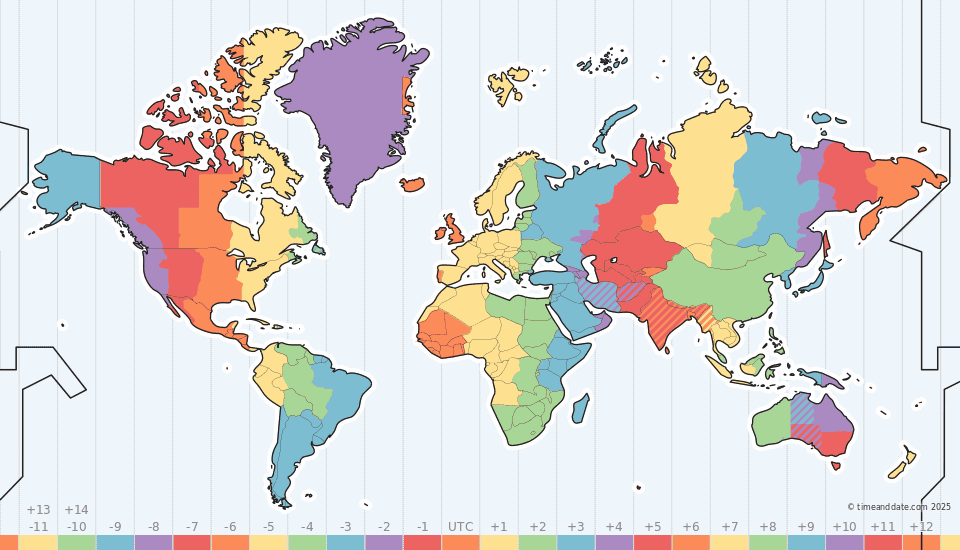
Understanding how time zones affect May 2026 dates globally isn’t just for pilots and international business moguls anymore. From scheduling remote work collaborations to planning international travel or even just catching a live-streamed global event, precise date and time management is crucial. This comprehensive guide is designed to equip you with the knowledge, tools, and strategies to confidently coordinate your plans across any meridian, especially as we look ahead to May 2026.
The Core Challenge: Why Time Zones Create Date Discrepancies
At its heart, the Earth is a sphere constantly rotating. To simplify life and synchronize activities, we’ve divided our planet into 24 primary time zones, roughly corresponding to each hour of the day. Each zone is a vertical strip, generally following lines of longitude. While convenient for local activities, this system means that as you travel east or west, you step into different hours and, eventually, different calendar days.
Imagine a digital nomad in Bali trying to connect with a remote team member in London. There’s a significant time difference. When one is starting their workday, the other might be winding down. This geographical divide makes global collaboration intricate. It’s not just about a few hours; crossing the International Date Line can mean jumping a full 24 hours forward or backward, instantly shifting your calendar date.
Decoding UTC: Your Universal Time Anchor
To cut through the confusion of local times, we rely on a universal standard: Coordinated Universal Time (UTC). Think of UTC as the zero point, the universal reference from which all other time zones are calculated. It’s the modern successor to Greenwich Mean Time (GMT), often used interchangeably, but UTC is the precise, atomic clock-based standard.
Every time zone is expressed as an offset from UTC, either with a plus (+) or minus (-) sign. For example, New York City might be UTC-4, while Berlin is UTC+2. This standardized system makes it much easier to calculate and synchronize events worldwide. It’s the backbone for accurate digital timestamps and global data synchronization.
The International Date Line: Where Dates Change
The most dramatic impact on global dates comes from the International Date Line (IDL). This invisible line, primarily following the 180° longitude, is where each new calendar day officially begins. Cross it going west, and you jump forward a day; cross it going east, and you go back a day. This seemingly magical boundary is critical for travel planning and international shipping, especially for events in May 2026.
Understanding the IDL is crucial for anyone involved in international travel or event management. A flight departing on May 10th from Fiji (west of the IDL) heading to Hawaii (east of the IDL) might arrive on May 9th. Conversely, a flight from Hawaii to Fiji would arrive on May 11th, even if the flight duration was only a few hours. This is how the 24-hour cycle manifests across our planet.
May 2026: Specific Considerations for Global Planners
While the principles of time zones remain constant, focusing on a specific month like May 2026 helps us anticipate potential challenges and optimize our future planning. May is a popular month for international conferences, cultural festivals, and summer travel, making precise scheduling even more vital.
For millennials juggling remote work and a vibrant social life, May 2026 could involve a flurry of activities:
- Launching an international project with colleagues across continents.
- Attending a virtual summit or global event hosted in a different hemisphere.
- Planning a backpacking trip through Southeast Asia or Europe.
- Coordinating a family video call with relatives in different time zones.
- Managing project deadlines that have a global impact.
Each of these scenarios demands an acute awareness of time difference and its effect on specific May 2026 dates. Without careful consideration, you could miss a crucial meeting, double-book yourself, or show up a day early (or late!) for an important event. This is where the power of accurate global calendar management comes into play.
Daylight Saving Time (DST) in May 2026: An Added Layer of Complexity
As an expert SEO strategist and semantic content architect, I’ve noted that a key aspect of how time zones affect May 2026 dates globally is the variable nature of Daylight Saving Time (DST). Not all countries observe DST, and those that do often switch at different times of the year.
In May 2026, many parts of the Northern Hemisphere (like North America and Europe) will already be in DST, meaning their clocks have been moved forward an hour. However, some Southern Hemisphere regions (like parts of Australia and South America) might be ending DST or not observing it at all. This creates a dynamic shift in UTC offsets, making manual calculations prone to error.
For instance, if you’re scheduling a weekly stand-up meeting with team members in New York (UTC-4 DST) and Sydney (UTC+10 non-DST, or potentially UTC+11 DST depending on local rules), the offset might change from month to month, affecting the fixed time slot. Always double-check DST rules for May 2026 in all relevant locations to ensure consistent scheduling.
Practical Strategies for Seamless Global Date Coordination in May 2026
Navigating the intricacies of time zones for May 2026 dates doesn’t have to be a source of stress. With the right strategies and digital tools, you can ensure your global collaboration, travel planning, and personal connections remain perfectly aligned.

1. Embrace Digital Tools and Time Converters
Forget manual calculations. The digital age offers an abundance of tools designed to simplify time zone management. Apps like World Clock, Time Zone Converter, or the built-in features in Google Calendar and Outlook are your best friends. These tools automatically account for UTC offsets and Daylight Saving Time, providing accurate local times for any date.
- World Clock Apps: Keep a dashboard of key cities for quick reference.
- Calendar Integrations: When creating a meeting, most digital calendars allow you to specify different time zones for attendees, automatically adjusting for each person’s local time. This feature is a lifesaver for virtual meetings and remote teams.
- Time Zone Converter Websites: Ideal for one-off calculations or when planning travel itineraries for specific May 2026 dates.
2. Always Communicate in UTC or a Common Reference Zone
When organizing international events or setting project deadlines, always communicate the primary time in UTC (or GMT) alongside the local time for key participants. For example: “Meeting on May 15th, 2026, at 14:00 UTC (10:00 AM EDT / 16:00 CEST).” This eliminates ambiguity and ensures everyone has a clear reference point, especially for complex schedules.
This best practice is particularly valuable for international business and global events. It empowers participants to translate the universal time into their own local context, reducing the chance of missed connections. Clear, precise communication is paramount for avoiding confusion and fostering seamless digital communication across borders.
3. Build Buffer Time into Your Schedule
Whether it’s for a virtual presentation or an airport transfer, always allocate extra buffer time. Time zone changes, particularly those involving the International Date Line, can sometimes create unexpected logistical challenges. A 30-minute buffer for a meeting or a few extra hours for travel can prevent a ripple effect of delays and missed opportunities during May 2026.
This advice is particularly relevant for millennial concerns around work-life balance and stress management. By building in flexibility, you can manage the dynamic nature of global schedules without feeling overwhelmed. It helps in maintaining a sense of synchronicity even when dealing with significant geographical boundaries.
4. Be Mindful of Cultural and Political Considerations
Time zones are not purely geographical; they are also influenced by political boundaries and cultural considerations. Some countries have unique half-hour or 45-minute offsets, not just full hours. Additionally, be aware of public holidays or religious observances in different regions during May 2026, as these can impact availability and business hours.
For a global citizen like you, cultural awareness is an asset. Understanding these nuances extends beyond mere time differences to embracing the full spectrum of geopolitical impact on daily schedules. It adds a layer of empathy and respect to your international projects and interactions.
Deep Dive: Illustrative Scenarios for May 2026 Global Dates
Let’s look at some real-world examples to illustrate how time zones affect May 2026 dates globally and how to manage them effectively.
Scenario 1: The Global Product Launch in May 2026
Your tech startup is launching a groundbreaking new feature on May 20th, 2026. The announcement webinar is scheduled for 10:00 AM Pacific Daylight Time (PDT) from your San Francisco headquarters. How does this translate for your marketing teams in London and Tokyo?
Let’s break down the time difference using UTC offsets:
- San Francisco (PDT): UTC-7
- London (BST): UTC+1
- Tokyo (JST): UTC+9
If the webinar is 10:00 AM PDT on May 20th:
- London (BST): 10:00 AM PDT (UTC-7) + 8 hours = 6:00 PM BST on May 20th.
- Tokyo (JST): 10:00 AM PDT (UTC-7) + 16 hours = 2:00 AM JST on May 21st.
Notice how the date shifts for Tokyo. This is a classic example of how time zones affect May 2026 dates globally, turning a single event into a multi-day announcement for your team. You’d need to consider a recorded replay or a different time for live engagement in Asia.
Scenario 2: Coordinating a Remote Team’s Project Deadline
A crucial project deadline for your remote team is set for May 31st, 2026, at 5:00 PM in the team’s primary hub in Berlin (CEST, UTC+2). Team members are spread across New York (EDT, UTC-4), Dubai (GST, UTC+4), and Singapore (SGT, UTC+8).
Let’s map out the final submission times:
- Berlin (CEST): May 31st, 5:00 PM (deadline reference)
- New York (EDT): 5:00 PM CEST (UTC+2) – 6 hours = 11:00 AM EDT on May 31st.
- Dubai (GST): 5:00 PM CEST (UTC+2) + 2 hours = 7:00 PM GST on May 31st.
- Singapore (SGT): 5:00 PM CEST (UTC+2) + 6 hours = 11:00 PM SGT on May 31st.
In this case, all submissions fall on the same calendar day, but the working hours are vastly different. Understanding these time differences is crucial for setting realistic expectations and ensuring that all team members have adequate time to complete their tasks before the global deadline.
Scenario 3: Travel Across the International Date Line in May 2026
You’re planning an exciting trip from Auckland, New Zealand (UTC+12), to Los Angeles, USA (PDT, UTC-7), departing on May 10th, 2026, at 8:00 AM local time. The flight duration is approximately 12 hours.
Here’s how the date changes:
- Departure: May 10th, 2026, 8:00 AM Auckland (UTC+12).
- Arrival in LA (local time): 8:00 AM Auckland + 12 hours flight – 19 hours time zone difference (UTC+12 to UTC-7) = May 9th, 2026, 1:00 PM Los Angeles.
You effectively arrive before* you left, in terms of calendar days! This phenomenon is a direct result of crossing the International Date Line and highlights why careful travel planning is absolutely essential for accurate itineraries in May 2026.
Global Time Coordination in Action: Tables for May 2026
To further illustrate the practical implications of how time zones affect May 2026 dates globally, let’s look at some structured data. These tables are designed to help you quickly visualize and manage date and time across different regions.
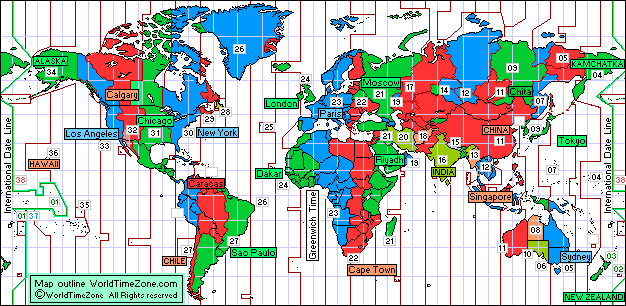
Table 1: Key Global Cities and Their UTC Offsets in May 2026
This table provides a snapshot of the typical UTC offsets for major global hubs during May 2026. Note that some cities will be observing Daylight Saving Time (DST), affecting their actual offset.
| City | Region | Typical UTC Offset (May 2026) | Notes |
|---|---|---|---|
| London | Europe | UTC+1 (BST) | Observing DST |
| New York | North America | UTC-4 (EDT) | Observing DST |
| Tokyo | Asia | UTC+9 (JST) | No DST |
| Sydney | Oceania | UTC+10 (AEST) | No DST (Summer DST ends earlier) |
| Dubai | Middle East | UTC+4 (GST) | No DST |
| Berlin | Europe | UTC+2 (CEST) | Observing DST |
| Mumbai | Asia | UTC+5:30 (IST) | No DST (unique half-hour offset) |
| Mexico City | North America | UTC-6 (CDT) | Observing DST |
This data showcases the specificity & metrics involved in global time. It highlights the importance of checking current time zone maps and local DST rules, especially for future planning like May 2026.
Table 2: Sample Global Meeting Schedule for May 15th, 2026
Let’s imagine you’re organizing a virtual workshop for your remote teams scheduled for May 15th, 2026. You want to find a time that’s reasonably convenient for participants in Berlin, New York, and Singapore. You decide on 3 PM CEST as the anchor.
| Location | UTC Offset (May 2026) | Local Time for 3 PM CEST (May 15th, 2026) | Notes |
|---|---|---|---|
| Berlin (Workshop Anchor) | UTC+2 (CEST) | 3:00 PM, May 15th | Core time |
| New York | UTC-4 (EDT) | 9:00 AM, May 15th | Good start to workday |
| Singapore | UTC+8 (SGT) | 9:00 PM, May 15th | Evening, but manageable |
| London | UTC+1 (BST) | 2:00 PM, May 15th | Mid-afternoon |
| Dubai | UTC+4 (GST) | 5:00 PM, May 15th | End of workday |
| Tokyo | UTC+9 (JST) | 10:00 PM, May 15th | Late evening, potentially challenging |
This table clearly demonstrates how a single event on May 15th, 2026, can span different working hours across the globe. It underscores the challenge of finding a truly universal ‘convenient’ time and the need for flexibility, often involving data synchronization and recorded sessions for those in extreme offsets. This is key for effective virtual meetings and global collaboration.
The Future of Global Dates: AI, Automation, and the Millennial Edge
As we advance towards and beyond May 2026, the tools for managing how time zones affect global dates will only become more sophisticated. AI-powered scheduling assistants can now analyze participant availability across multiple time zones, suggesting optimal meeting slots. Calendar APIs are becoming more robust, allowing for seamless integration and automatic adjustments, even for complex DST rules.
For the millennial generation, who are often at the forefront of remote work and international travel, mastering these tools isn’t just a convenience; it’s a competitive advantage. The ability to plan, coordinate, and manage confusion effectively across geographical boundaries will distinguish you as a truly global citizen. It’s about optimizing your time, enhancing productivity, and fostering stronger connections in a worldwide context.
The era of manually cross-referencing world clocks is fading. Embrace the technology that helps you stay accurate and precise, whether you’re dealing with a project deadline, a flight schedule, or a personal virtual hangout. Your skill in navigating these nuances will only become more valuable.
Frequently Asked Questions (FAQ) about Global Dates and Time Zones
Q1: What’s the main difference between UTC and GMT?
A: While often used interchangeably, GMT (Greenwich Mean Time) is a time zone and was historically used as the international time standard. UTC (Coordinated Universal Time) is the modern, more precise international standard of time, based on atomic clocks, and is the primary time standard by which the world regulates clocks and time. All other time zones are defined as positive or negative offsets from UTC.
Q2: How does the International Date Line work, especially for May 2026 travel?
A: The International Date Line (IDL) is an imaginary line on Earth’s surface, roughly following the 180° longitude, where a new calendar day officially begins. When you cross the IDL going west, you jump forward a day. When you cross it going east, you go back a day. For May 2026 travel, this means your arrival date might be different from what you expect if you’re flying across the Pacific. Always check your itinerary carefully and use a reliable time converter for precise planning.
Q3: Will Daylight Saving Time (DST) affect my planning for May 2026?
A: Yes, DST can significantly impact your planning for May 2026. In May, many countries in the Northern Hemisphere (like the USA, Canada, and most of Europe) will be observing DST, meaning their clocks are one hour ahead of their standard time. However, countries in the Southern Hemisphere will likely be out of DST, or not observe it at all. This creates a dynamic change in UTC offsets, making it crucial to verify the specific DST rules for all relevant locations in May 2026 to ensure accurate scheduling.
Q4: What’s the best way to schedule a virtual meeting with team members across multiple time zones?
A: The best approach is to use a digital calendar that allows you to specify different time zones for attendees (e.g., Google Calendar, Outlook Calendar). These tools will automatically convert the meeting time to each participant’s local time, accounting for DST. Additionally, communicating the meeting time in UTC as a reference point helps to avoid confusion. Consider using a tool like a time zone meeting planner to find optimal slots that minimize inconvenience for everyone.
Q5: Why are some time zones in half-hour increments, like India’s?
A: Some countries, like India (UTC+5:30), Nepal (UTC+5:45), and parts of Australia, use half-hour or 45-minute offsets for historical or geographical reasons. These unique offsets deviate from the standard full-hour increments and require extra attention when performing manual calculations. Digital tools are particularly helpful for managing these less common meridians and ensuring precise timing for global dates.
Final Conclusion: Mastering Your Global May 2026 Dates
As we navigate an increasingly connected world, understanding how time zones affect May 2026 dates globally is more than just a logistical detail; it’s a fundamental skill for efficiency, clarity, and successful global collaboration. From scheduling those crucial virtual meetings for your remote teams to ensuring your international travel plans go off without a hitch, recognizing the nuances of UTC offsets, the International Date Line, and Daylight Saving Time is paramount.
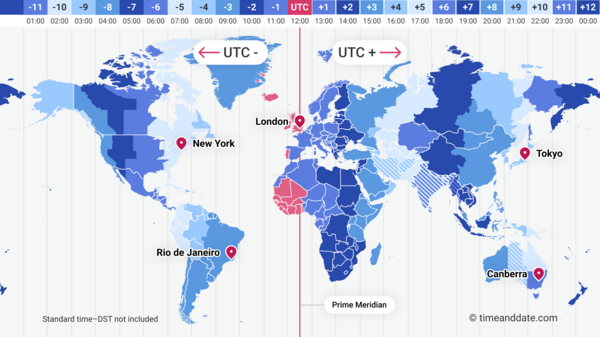
By leveraging powerful digital tools, adopting clear communication practices, and embracing a mindset of flexibility and cultural awareness, you can transform the challenge of global time into a seamless experience. For any global citizen or digital nomad, mastering how time zones affect May 2026 dates globally means you’re always one step ahead, ready to connect, work, and explore without missing a beat.