The Calendar Conundrum: Unpacking the Mystery of February& ;s Fleeting Days
Ever found yourself staring at your calendar, wondering, “Seriously, again?” If you’re pondering Why Is February The Shortest Month, you’re not alone. This unique month, with its distinct 28 or 29 days, has puzzled minds for centuries. It stands out in a world of 30 and 31-day brethren, sparking curiosity about its peculiar origin. Let’s embark on a journey through history, astronomy, and even a bit of ancient Roman superstition to uncover the truth.

Forget everything you think you know about neat, logical calendar designs. The story of February is a tangled tale of emperors, pontiffs, and the slow march of celestial bodies. Understanding its brevity means diving deep into the roots of our modern Gregorian calendar system. Get ready to decode the fascinating reasons behind February’s consistently shortest month status.
A Blast from the Past: Peeking into Ancient Rome’s Calendar Chaos
Our story begins not with a bang, but with a Roman shrug. Back in ancient Rome, timekeeping was less about precision and more about practicality. The initial calendar systems were, to put it mildly, a hot mess.
Romulus’s First Draft: A 10-Month Wonder
Imagine a calendar that simply skipped winter. That was essentially the Romulus calendar, the legendary first Roman calendar, supposedly introduced in the 7th century BC. It consisted of just 10 months, beginning in March and ending in December. The winter period was simply an unassigned gap, an uncounted void between farming seasons. Farmers didn’t need to track days when nothing was growing, so why bother?
This early system totaled only 304 days, a far cry from a true solar year. It worked for a while, but as the Roman state grew, such an imprecise calendar system caused increasing problems. This system was hardly sustainable for long-term planning or religious festivals.
Numa Pompilius Steps In: The Birth of January and February
Around 713 BC, the second legendary king of Rome, Numa Pompilius, decided things needed an upgrade. He introduced two new months, January and February, aiming to align the calendar more closely with the actual lunar cycles. This reform brought the total number of months to 12.
Numa was a superstitious guy, like many ancient Romans. Even numbers were considered unlucky, especially for festivals. To avoid this, he made most months 29 or 31 days long. However, with a total of 355 days (a common length for a lunar calendar), he still needed to fit an odd number of days to avoid unlucky pairings. February ended up with 28 days, making it the lone even-numbered month. It was also placed at the end of the year, a position often associated with purification rituals and the dead. This original status as the year’s last and shortest month stuck with February for a long time.
Here’s a quick look at how the calendar evolved in its early stages:
| Calendar Era | Year Length (Approx.) | Number of Months | February’s Status |
|---|---|---|---|
| Romulus’s Calendar | 304 days | 10 months | Not yet existing |
| Numa Pompilius’s Calendar | 355 days | 12 months | Introduced, 28 days, last month |
| Republican Roman Calendar | 355 days + intercalary month | 12 + occasional 13th | Still 28 days |
The Julian Revolution: Julius Caesar’s Calendar Overhaul
Fast forward a few centuries, and the Roman calendar was still a hot mess. The 355-day calendar constantly drifted out of sync with the seasons. To fix this, a confusing intercalary month was periodically inserted by the pontifex maximus. This often happened arbitrarily, sometimes for political reasons, leading to widespread confusion and a calendar that was wildly inaccurate.
Fixing the Drift: Enter the Solar Year
By 45 BC, the calendar was a full three months out of sync with the actual seasons. This meant spring festivals were happening in summer, and farmers had no idea when to plant. Enter Julius Caesar, who, fresh from conquering Gaul, decided to conquer timekeeping next. Consulting with astronomer Sosigenes of Alexandria, Caesar introduced a revolutionary new Julian calendar system. This system was based on the solar year, calculated at 365.25 days.
To correct the accumulated drift, Caesar added an unprecedented 90 days to the year 46 BC, making it an astonishing 445 days long. This was quite possibly the longest year in human history, known as the ‘Year of Confusion.’ It took some serious adjustment, but it finally aligned the calendar with the seasons.
February’s Sacrifice: Keeping the Short End
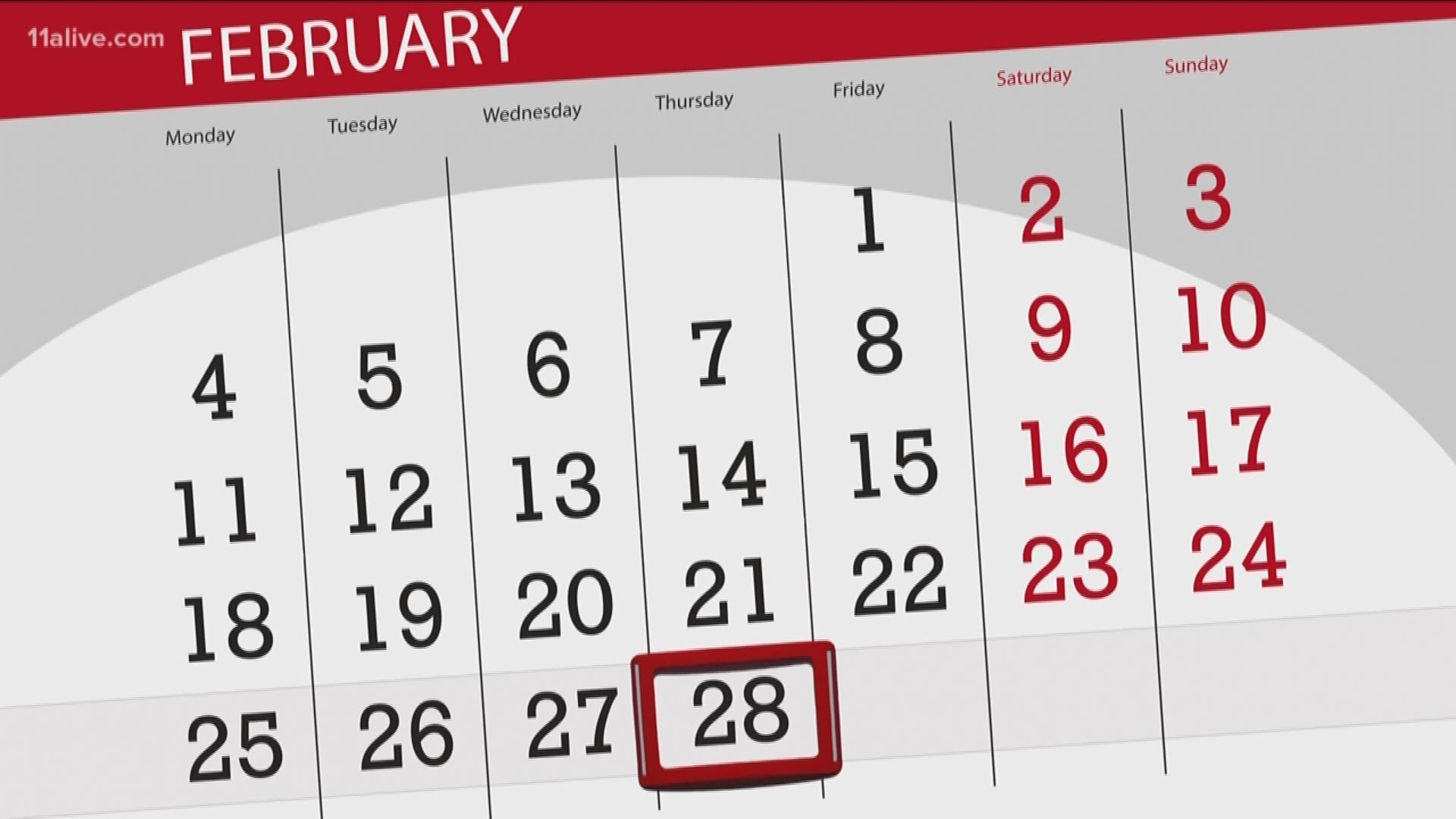
Under the Julian reform, Caesar added days to most months, making them 30 or 31 days long. However, he kept February at its traditional 28 days. Why? Partly out of respect for tradition, and partly because February was still viewed as the month for purification and mourning. It was the natural place for the extra day of the leap year to be inserted, at the very end of the original calendar year. The leap day was not added to the end of February as we know it today. Instead, an extra day was inserted after February 23rd, essentially duplicating the 24th of February. This day was called the bissextile day.
Source: https://media.11alive.com
The Julian calendar was a monumental step forward, bringing much-needed stability to timekeeping. It standardized the concept of a leap year every four years. This ensured the calendar remained aligned with the Earth’s orbit around the sun.
| Key Calendar Reform | Reformer/Authority | Year of Implementation | Impact on February’s Length | Key Change |
|---|---|---|---|---|
| Numa’s Reforms | Numa Pompilius | 713 BC | Set to 28 days | Added January & February, aimed for lunar alignment |
| Julian Calendar | Julius Caesar | 45 BC | Kept at 28 days (29 in leap year) | Adopted solar year, introduced regular leap years |
| Gregorian Calendar | Pope Gregory XIII | 1582 AD | Still 28 days (29 in leap year) | Refined leap year rules for better accuracy |
The Gregorian Adjustment: Pope Gregory XIII’s Refinements
The Julian calendar was good, but not perfect. Over centuries, a small but significant error began to accumulate, leading to yet another calendar crisis. This required another major reform to fine-tune our calendar system.
The Julian Calendar’s Glitch: A Small but Significant Error
The Julian calendar assumed a year was exactly 365.25 days long. However, the actual solar year is slightly shorter: 365.2425 days. That seemingly tiny difference of about 11 minutes per year adds up. By the 16th century, the calendar was roughly 10 days out of sync. This drift was particularly problematic for the Catholic Church because it affected the calculation of Easter, which is tied to the vernal equinox. The equinox was falling earlier and earlier, throwing religious observances into disarray.
Leap Year Rules: The Gregorian System Explained
In 1582 AD, Pope Gregory XIII stepped in to correct this error. He introduced the Gregorian calendar, which is the one we use today. The most significant change involved the leap year rules. To prevent future drift, the Gregorian calendar decreed that a year is a leap year if it is divisible by 4, *unless it is divisible by 100 but not by 400. So, 1900 was not a leap year, but 2000 was.
This refined rule kept the calendar more accurately aligned with the solar year. Crucially, February remained the shortest month, still hosting the extra leap day. The tradition, by this point, was simply too ingrained to change. So, the question of Why Is February The Shortest Month was settled for good, based on historical inertia rather than astronomical necessity.
February Through the Ages: Cultural Quirks and Modern Meanings
Beyond its astronomical and historical roots, February has developed its own rich cultural tapestry. From ancient rituals to modern celebrations, this specific month holds unique significance.
Month of Purifications: February’s Ancient Significance
The name February comes from “Februa,” a Roman festival of purification and atonement held on February 15th. This ancient ritual involved cleansing and washing away sins. It was a time to prepare for the new year, which, even after January was introduced, still began in March for many Roman traditions. This reinforces February’s position as a month associated with transition and cleansing, often at the tail end of the calendar year.
Modern Marvels and Mirth: Holidays and Happenings
Today, February is anything but a month of cleansing and doom. It’s packed with meaningful modern observances. We celebrate Valentine’s Day, spreading love and affection. It’s Black History Month, a crucial time for reflection and education. In the US, we also observe Presidents’ Day, honoring past leaders. Despite its brevity, February punches above its weight in terms of cultural impact. It’s a reminder that even the shortest month can be incredibly significant.
The limited day count of February often feels like a rush. Yet, this sprint through the month also makes it feel unique. Its distinct character comes from a blend of ancient traditions and practical astronomical adjustments.
Decoding the Calendar: Why the Lengths Vary So Much?
The varying lengths of our months might seem arbitrary. But they are a testament to centuries of attempts to reconcile human systems with cosmic realities. Understanding this requires appreciating the complexity of timekeeping.
A Mix of History, Astronomy, and Tradition
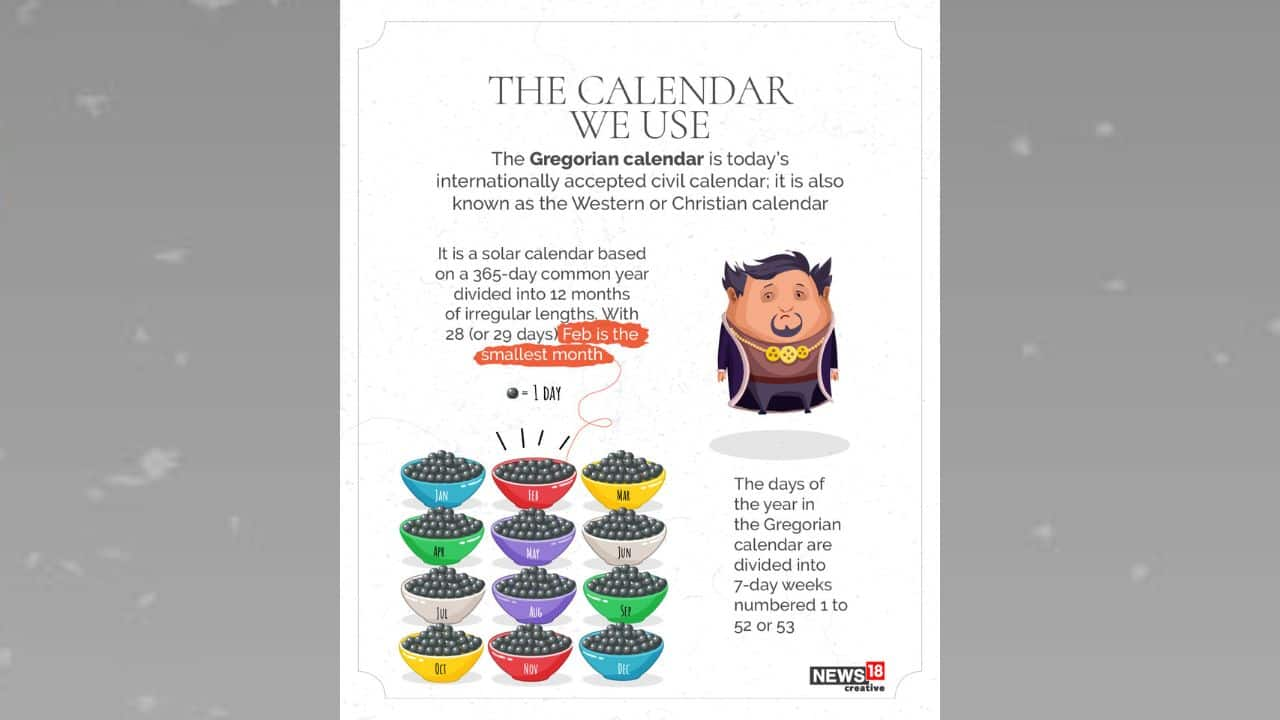
The reason for differing month lengths is a complex stew of historical necessity, ancient superstitions, and a dash of imperial ego. It’s not just about astronomy. It’s also about what people believed, how they lived, and who held power. The Roman calendar was always a work in progress, adapted by figures like Julius Caesar and Pope Gregory XIII. Their reforms were crucial in aligning human calendars with the natural world.
The primary goal was always to synchronize the calendar with the solar year. This ensures seasons occur at predictable times. Farmers, religious practitioners, and even casual observers benefit from this consistency. The lengths of 30, 31, and 28/29 days are simply what worked out during these various reforms.
Source: https://images.moneycontrol.com
The Pragmatism of Uneven Months
One might wonder: why not just make all months an even 30 or 31 days? Or simply divide the year into equal segments? The answer lies in the numbers themselves. A 365-day year isn’t perfectly divisible by simple round numbers like 30. And the desire to keep February at the end of the traditional Roman year, coupled with the need to accommodate a leap day, meant some month had to take the short straw. February, with its historical association with endings and purification, was the designated candidate. It became the ultimate odd one out, a pragmatic solution to a complex problem.
The day count for each month is a historical artifact. It reflects ancient decisions that ripple through our modern lives. The modern Gregorian calendar is a highly refined machine. However, its gears and cogs still bear the marks of its intricate past.
| Month | Days (Common Year) | Days (Leap Year) | Original Roman (Numa) | Notes |
|---|---|---|---|---|
| January | 31 | 31 | 29 | Named after Janus, god of beginnings |
| February | 28 | 29 | 28 | Month of purification, shortest month |
| March | 31 | 31 | 31 | Named after Mars, god of war; original first month |
| April | 30 | 30 | 29 | From aperire (to open) or Aphrodite |
| May | 31 | 31 | 31 | Named after Maia, goddess of growth |
| June | 30 | 30 | 29 | Named after Juno, queen of the gods |
| July | 31 | 31 | 31 (as Quintilis) | Renamed for Julius Caesar |
| August | 31 | 31 | 29 (as Sextilis) | Renamed for Augustus Caesar |
| September | 30 | 30 | 29 | Seventh month (septem) |
| October | 31 | 31 | 31 | Eighth month (octo) |
| November | 30 | 30 | 29 | Ninth month (novem) |
| December | 31 | 31 | 29 | Tenth month (decem*) |
Engaging with Time: Our Relationship with Calendars
In our fast-paced world, understanding the nuances of our calendar can offer more than just historical trivia. It helps us appreciate the tools we use daily. It’s about recognizing the legacy of those who wrestled with the complexities of timekeeping.
Mastering Your Calendar: Tips for Productivity
Even though February is the shortest month, it doesn’t have to throw off your planning. With today’s digital calendars and productivity tools, managing time is easier than ever. Use its brevity to your advantage. Treat February as a sprint, a focused period to achieve specific goals. This can be a great way to kickstart new habits or finish projects before spring.
Being aware of these historical quirks enriches our understanding of modern life. It shows that even the most fundamental structures, like our calendar system, have deep historical roots. So, next time you plan your month, spare a thought for those ancient Romans and their calendar struggles!
Frequently Asked Questions About February’s Length
Got more burning questions about this fascinating, fleeting month? We’ve got you covered!
-
Why did Romans hate February?
It’s not that they hated it, but February was associated with purification rituals (Februa) and the dead. It was the last month of the year in earlier Roman calendars, often seen as a period of cleansing and ending. This gave it a somewhat solemn or unlucky connotation compared to other months.
-
Why did they add a leap day to February?
When Julius Caesar reformed the calendar, he based it on the solar year of approximately 365.25 days. To account for the quarter-day, an extra day (the leap day) was added every four years. February, being the shortest month and traditionally the ‘end’ of the Roman year, was the logical place to insert this corrective day.
-
Could February ever change its length?
While technically possible, it’s highly unlikely. The Gregorian calendar is globally accepted, and changing February’s length would cause immense international disruption. Tradition and established systems far outweigh any practical benefit of such a change at this point.
-
What’s the difference between the Julian and Gregorian calendars?
Both are solar calendars, but the Gregorian calendar is a refinement of the Julian calendar. The Julian calendar assumed a year was exactly 365.25 days, leading to a slight drift over centuries. The Gregorian calendar introduced more precise leap year rules (e.g., centurial years not divisible by 400 are not leap years) to correct this accumulated error and keep the calendar more accurately aligned with the solar year.

Source: https://i.ytimg.com
Conclusion: The Enduring Legacy of the Shortest Month
From the rudimentary calendars of ancient Rome to the precision of the Gregorian calendar, February’s journey has been anything but short on history. It began as a late addition, a superstitious placeholder, and evolved into a necessary cog in our timekeeping machine. The reasons Why Is February The Shortest Month are deeply embedded in astronomical realities, political decrees, and centuries of tradition.

Source: https://i.ytimg.com
So, the next time you find yourself planning your month or marking off days, remember the long and winding road that led to February’s unique brevity. It’s a tiny testament to humanity’s ongoing quest to understand and organize our world. The shortest month carries a disproportionately rich history, a true calendar conundrum solved through centuries of human ingenuity.